Art and Culture 

Especially in a time of profound social change, growing uncertainty, and increasing tensions, preserving our art and culture is of fundamental importance. They are far more than entertainment or tradition – they are an expression of our values, our history, and our shared understanding of who we are.

Konrad Adenauer summed it up aptly:
“Art and culture are the noblest expression of the human spirit and a national asset worthy of protection.”

This thought is more relevant today than ever. Art and culture provide orientation, foster a sense of identity, and enable understanding across social, cultural, and national boundaries. They create encounters, encourage dialogue, and thereby strengthen the cohesion of our society.

Especially now, it is our shared responsibility to preserve, support and make art and culture visible. For those who protect their culture also protect the future of their society.

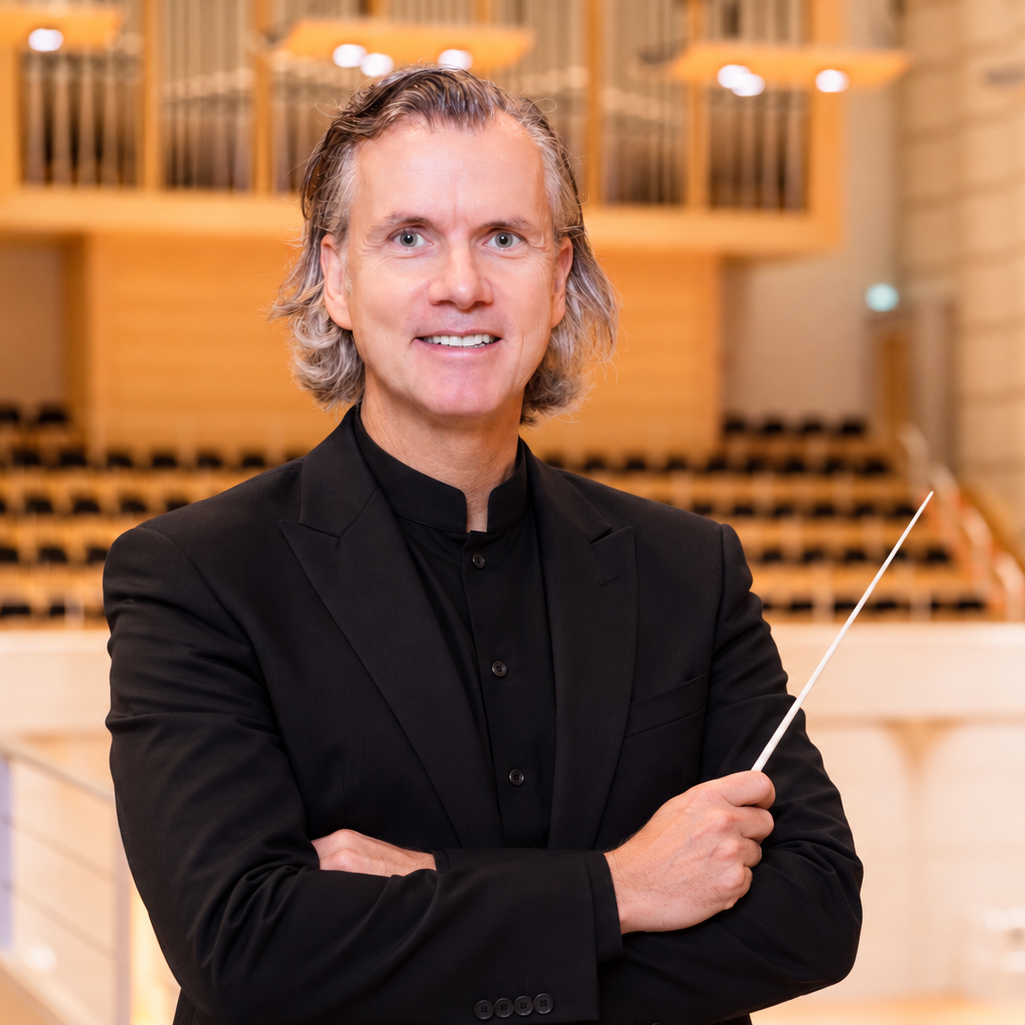
Thomas Boger


BIOGRAPHY

Thomas Boger is a German conductor whose artistic approach combines a deep grounding in the Classical and Romantic orchestral traditions with an openness to contemporary music, film scores, and cross-genre concert programmes. Over the course of 17 years as chief conductor and music director of professional orchestras in Germany, he has played a defining role in shaping their sound, artistic programming, and public profile.

From 2009 to 2024, Thomas Boger served as Chief Conductor of the Lower Saxony Police Orchestra in Hanover. In addition to symphonic and concert performances, his work focused on CD and radio recordings, the development of diverse concert formats, and collaborations with renowned artists. His musical partners have included pianist Prof. Markus Becker, cellist Oliver Mascarenhas, and trumpeter Rupprecht Drees.

From 2024 to 2026, Thomas Boger served as Director and Chief Conductor of the State of North Rhine-Westphalia’s official representative orchestra, based in Hagen. In addition to his artistic leadership, he was responsible for the ensemble’s organisational and musical development.

In addition to his permanent leadership positions, Boger has appeared as a guest conductor with a range of ensembles, including the Bavarian Police Orchestra in Munich, the Federal Police Orchestra in Hanover, Army Band No. 1, and the North Rhine-Westphalia Youth Wind Philharmonic. Working with different ensembles has broadened his artistic experience and reflects his versatility as a conductor.

His repertoire spans works by Bach, Beethoven, Brahms, Bartók, and Dvořák, as well as music of the 20th and 21st centuries. Film music, jazz-influenced compositions, and crossover projects further enrich his artistic range. World premieres, recordings, and his own arrangements are also integral to his work. His interpretations are characterised by a finely balanced orchestral sound, clarity of texture, and expressive phrasing.

Before pursuing a career in conducting, Thomas Boger received his instrumental training as a trumpeter, studying with Prof. Otto Sauter and Prof. Max Sommerhalder, among others. He subsequently gained extensive experience as a professional orchestral musician, performing with a wide range of ensembles. His orchestral engagements included the Schleswig-Holstein Music Festival Orchestra, the Munich Chamber Orchestra, and the Oldenburg State Orchestra, as well as period-instrument ensembles specialising in historically informed performance, such as Bach Consort Leipzig, Concerto Brandenburg, Salzburg Barock, and the Göttingen Baroque Orchestra.

His conducting studies took him to Professor Hans Joachim Kauffmann at the University of the Arts Bremen and Joachim Harder at the Detmold University of Music. He further developed his artistic and interpretative skills through several years of private conducting studies with Dutch conductor Pierre Kuijpers at the Maastricht Conservatory. He also completed a degree in music education at the Detmold University of Music.

His first-hand experience as an orchestral musician, working under a variety of conductors, and his extensive engagement with historically informed performance practice, together with his formal conducting training, form the foundation of his artistic philosophy. These influences continue to shape his approach to orchestral sound, his sensitivity to chamber music-style interaction within the orchestra, and his nuanced treatment of articulation, phrasing, and musical expression.

Music education and audience development are another important focus of his work. Through innovative concert formats and projects aimed at younger audiences, he combines artistic ambition with social relevance, seeking to create new ways for people to engage with orchestral music. For Boger, artistic excellence and an engaging, accessible concert experience are inseparable.

“A Fantastic, Magical Atmosphere”

Standing ovation for the Orchestra of the State of Lower Saxony at St. John’s Church in Göttingen. Around 35 musicians, under the direction of Thomas Boger, delivered a highly professional performance and created an impressive, musically varied evening, earning a standing ovation from the enthusiastic audience. 

(Göttinger Tageblatt) 

“A Rich and Nuanced Listening Experience”

And this is what distinguishes this conductor: his calm presence, his attentiveness to others, his recognition of the achievements of his musicians, and his willingness to remain in the background, even though physically he stood at the very centre of attention. This concert, exactly as it was, could have been recorded and released on CD. 

(Celler Zeitung)

“That was the musical highlight of the year.” 

Under the direction of Thomas Boger, the orchestra presented the audience with a varied programme specially tailored to the acoustics and atmosphere of the church. The ensemble demonstrated not only the breadth of its repertoire, but above all impressed with its musical achievement: a wide range of expressive colours, a high artistic standard, and a sonority that effortlessly filled the nave even in the quietest passages. 

(Sulinger Kreiszeitung)

“A delight in on Bänkelsängern and Artie Shaw” 

The Orchestra of the State of Lower Saxony, under the inspiring direction of Thomas Boger, celebrated symphonic wind music in a sensational and outstanding concert. One of the absolute highlights was Artie Shaw’s Concerto for Clarinet and Orchestra. The American jazz clarinettist, arranger, composer, bandleader and author was represented by a solo part performed by Yoshitaka Sumita with virtuoso elegance and tonal refinement. The orchestra accompanied him with great assurance through the rhythmically demanding passages under the expert direction of Thomas Boger. 

(Peiner Zeitung) 

“Powerful Sound with Sculpted Contours”

Johann Sebastian Bach’s Passacaglia in C minor, BWV 582 is already a powerful work in its original version for organ. Thomas Boger arranged it for his orchestra, giving it not only great richness of sound but also strikingly vivid contours, as themes and motifs pass in contrapuntal interplay through the different orchestral sections. In this interpretation, Bach’s work acquires an immense variety of tonal colours and an almost luxuriant, Romantic expressiveness. After a tension-filled introduction, the musicians brought exuberant energy to Edvard Grieg’s Norwegian Dance No. 4, while the central section unfolded with the natural poetry of flutes and clarinets. In John Barnes Chance’s Variations on a Korean Folk Song, the orchestra also impressed with refinement of sound, orchestral virtuosity, and the brilliance of its soloists.

…Nach einer spannungsgeladenen Introduktion gaben die Musiker dem „Norwegischen Tanz“ Nr. IV von Edvard Grieg ausgelassene Wildheit und – im Mittelteil – naturhafte Poesie von Flöten und Klarinetten. Auch in den „Variationen über ein koreanisches Volkslied“ von John Barnes Chance wusste das Polizeiorchester mit Klangfeinheit und Orchestervirtuosität und immer wieder auch mit der Virtuosität der Solopartien zu glänzen.

(Delmenhorster Kurier) 

“A Sensitive Dialogue among the Winds”

Die Akustik der St. Trinitatis Kirche und der Klang des Polizeiorchester Niedersachsen sind Freunde… So auch beim Eröffnungswerk, der für Bläser eingerichteten Toccata und Fuge d-moll von Johann Sebastian Bach. Die Bläser bewiesen in der Fuge höchst polyphone Transparenz. Flöten, Oboen, Klarinetten lieferten sich einen sensiblen Dialog mit dem Blech und ließen das populäre Werk mit einem mächtigen Tutti enden. Auch in der „Peer Gynt Suite“ gibt es Licht und Schatten, zarte Momente und geradezu brutale akustische Ballungen. Orchesterleiter Thomas Boger wahrte stets die Balance zwischen den Stimmgruppen und so erblühte in der „Morgenstimmung“ ein zarter nordischer Tag, der sich in dynamischer Steigerung des gesamten Orchesters zur strahlenden Schönheit eines frischen Naturbildes entfaltete. Über die mystische feierlichen Effekte in „Ases Tod“ und dem graziösen Rhythmus von „Anitras Tanz“ brachen dann die Brachialeffekte des voll aus sich herausgehenden Orchesters, unterstützt von der virtuosen Percussionsgruppe, über das Publikum herein. 

(Celler Zeitung)

“A Guarantee of Musical Quality”

With an extraordinary programme, the Orchestra of the State of Lower Saxony, conducted by Thomas Boger, once again demonstrated why it is so highly regarded in the city of Lessing. St. Trinitatis proved to be an ideal venue for the powerfully performing ensemble. Free from the otherwise disturbing reverberation, the immense masses of sound could unfold fully within the sacred space, while even the quietest passages retained their intimacy. Composers such as Thiemo Kraas have woven precisely these qualities into their music. He calls his tone painting Imagasy – a word formed from “imagination” and “fantasy”. The musicians carried their audience into a dream world of shimmering colours. The percussion establishes a subdued pulse, the orchestra spreads out into broad sonic landscapes, searches for its theme, and finally a hymn-like melody emerges with great intensity, culminating in powerful climaxes. Boger resists the understandable temptation to impress his audience through sheer volume. Instead, he repeatedly creates atmospheric moments, as in the Angel Trio from Mendelssohn’s Elijah. Above a spiritually charged soundscape, shaped with great effect by trombones and trumpets, flutes and clarinets unite in an enchanting song almost comparable to the human voice. 

(Braunschweiger Zeitung)

“Police Orchestra in Symbiosis with Rainbirds and Planet Emily: Festival of Generations Gets Aegi Moving” 

Auch die zweite Auflage erfüllte seinen Zweck voll und ganz. Es machte Betagte, Mittelalter und Jungen ebenso viel Spaß wie den Künstlern auf der Bühne. Das Polizeiorchester unter der Leitung von Thomas Boger glänzte mal mit raffinierten Jazz-Arrangements, mal mit der angemessenen aufgepumpten Bombast-Pop-Nummer „Music“ von John Miles. Boger spielte immer auch die Fähigkeiten seiner Solisten in den Vordergrund. Mit den Bands ging der orchestrale Musikkörper eine Symbiose ein. Vom Rainbirds-Hit „Blueprint“ habe sie schon unendlich viele Versionen gespielt, gestand Sängerin Katharina Franck, doch die Variante mit dem Polizeiorchester sei „die Krönung aller Versionen“. 

(Neue Presse, Hannover) 

“Under Thomas Boger’s energetic direction, the wind players delivered a performance of outstanding tonal and rhythmic quality – both in the Hobbit movement from Johan de Meij’s Lord of the Rings Symphony and in the bravura Dance of the Hours from Amilcare Ponchielli’s opera La Gioconda. For the James Bond medley, Boger could draw on more secret weapons than Her Majesty’s agent ever had at his disposal: his superbly staffed orchestra includes more than one prizewinner from the Jugend musiziert competition.” 

(Neue Westfälische Gütersloh)

Through his professionalism on the podium, Thomas Boger inspired the orchestra to create vivid, colourful sonorities and dynamic interplay between woodwinds and brass.

(Die Glocke Gütersloh)

Johann Sebastian Bach

Air aus der Orchestersuite D-Dur

Arr.: Björn Vüllgraf

Leroy Anderson 

Christams Festival 

Satoshi Yagisawa

The Benefaction from Sky and Mother Earth 

Herbert Grönemeyer 

Halt mich

Arr.: Andreas Bürgel 

Traditional 

Still, Still … Chill 

Arr.: Jörg Murschinski

Traditional 

We wish you a merry  Chrismas

Arr.: Guido Rennert